



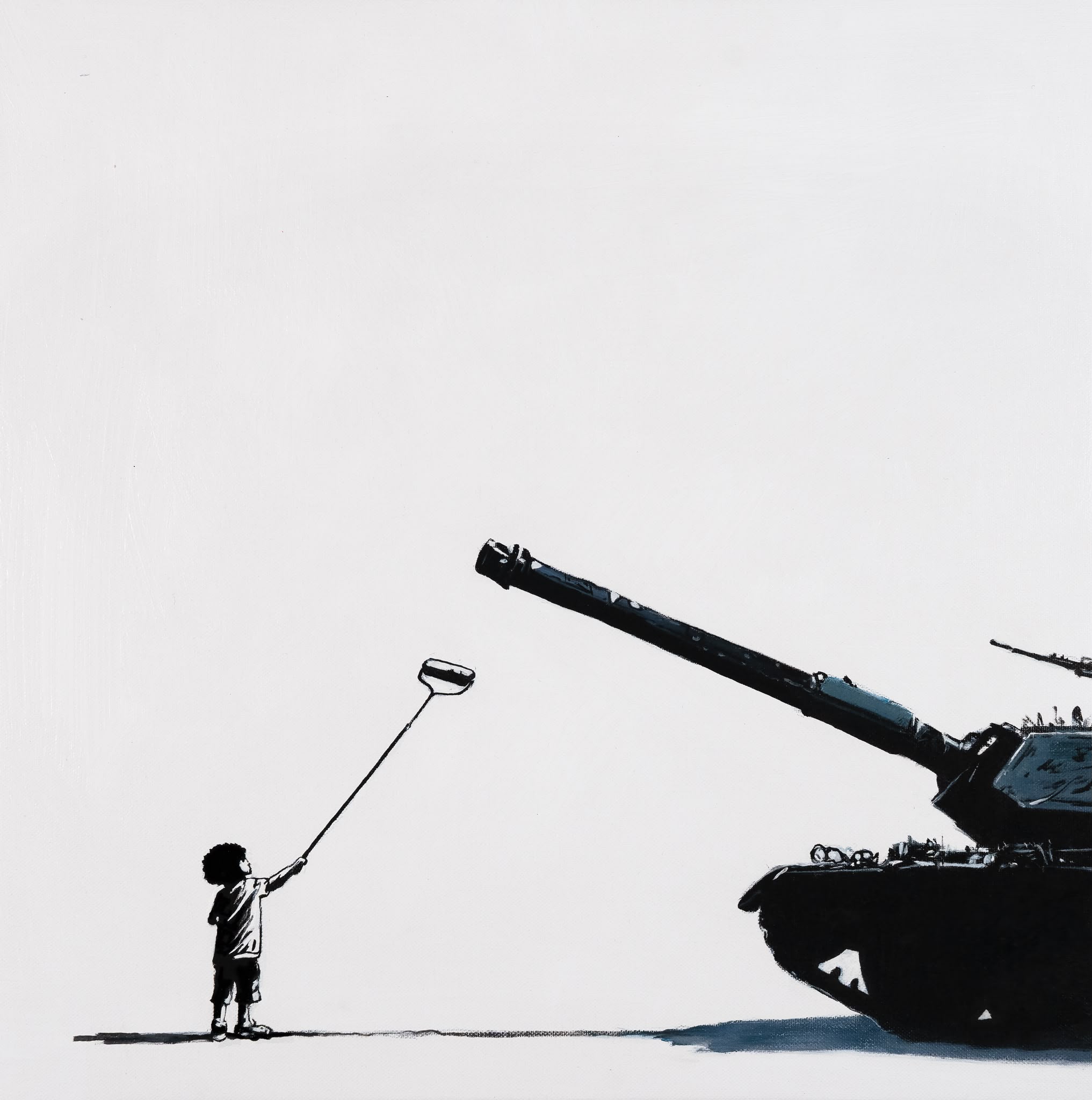
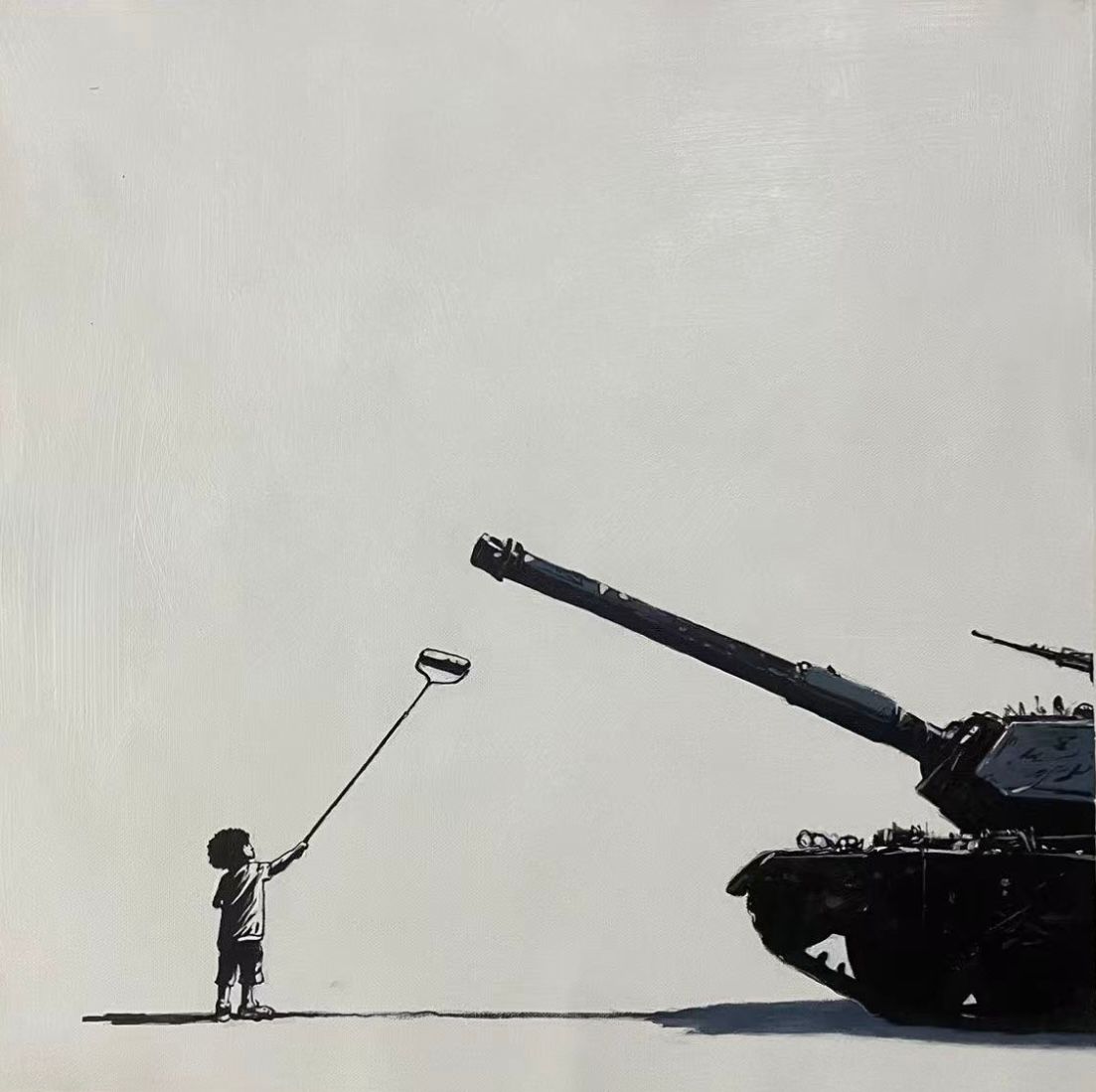
A lone child stands before a weapon of war, reaching upward with a paint roller, an act that is both impossibly small and profoundly deliberate. The scale is unequal: innocence against machinery, hope against force, humanity against systems designed to destroy. Yet the child does not retreat. This is not an attempt to dismantle the weapon, but to challenge what it represents. Painting becomes an act of refusal, a rejection of violence as something permanent, acceptable, or untouchable. The gesture is quiet, almost tender, but it carries moral weight. Where power relies on dominance, the child responds with belief. The work speaks to the moment before cynicism sets in, when change still feels possible, even if it seems unrealistic. It reminds us that the world is not altered first through force, but through the insistence that it can be different. Paint the World a Better Place is a statement about courage without aggression, resistance without weapons, and the fragile but necessary act of imagining a future not defined by war.