





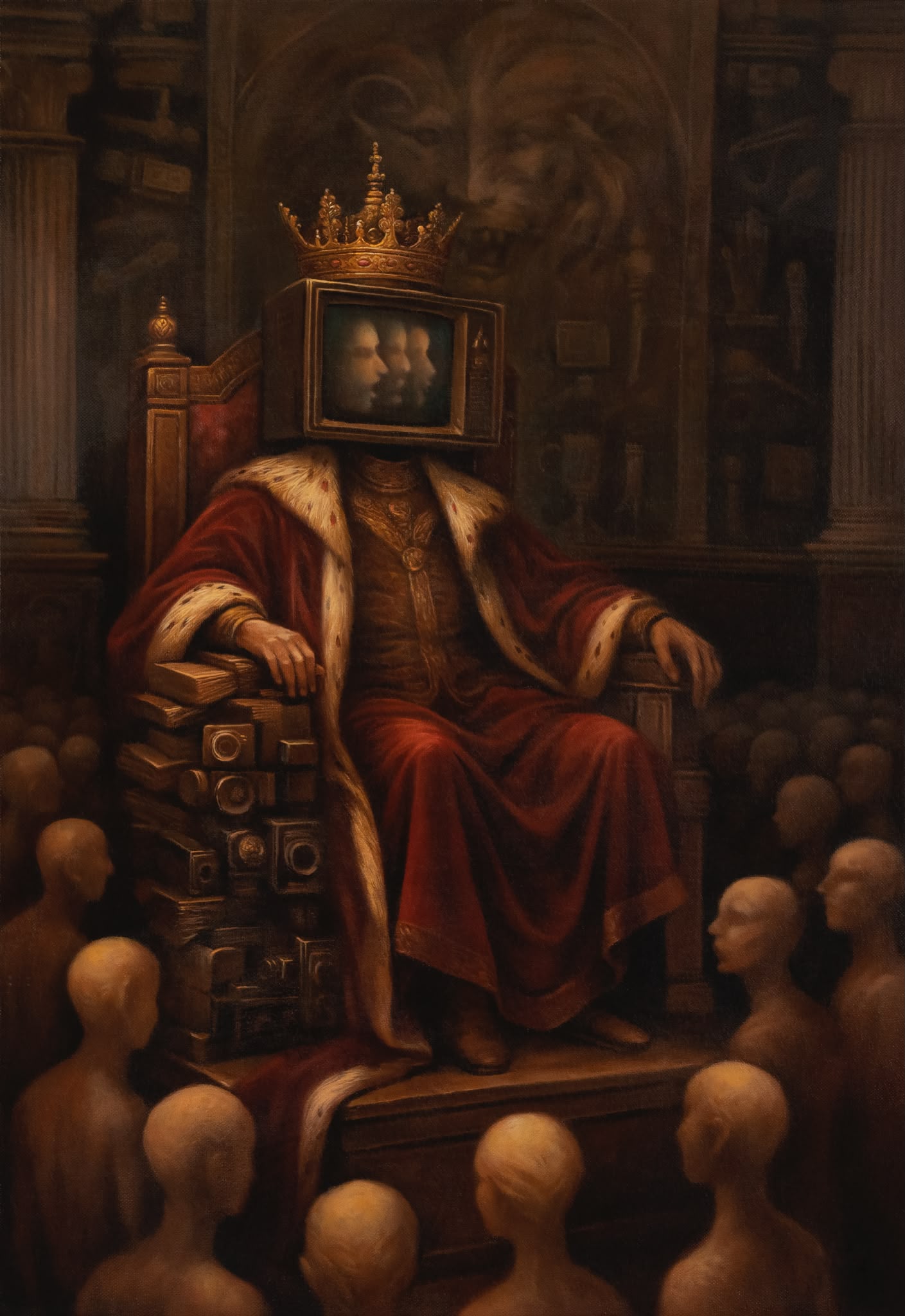
In Kings of
the Sinks, a crowned monarch sits enthroned in opulent stillness, yet his head
has been replaced by the muted glow of a television screen. The composition
recalls classical portraiture—rich fabrics, carved stone, and heraldic
emblems—only to unravel into a meditation on mediated authority. At his feet,
faceless figures gather in quiet submission, their individuality dissolved into
uniform anonymity. The work suggests a sovereignty no longer rooted in
bloodline or decree, but in broadcast—where power is projected, consumed, and
unquestioned.