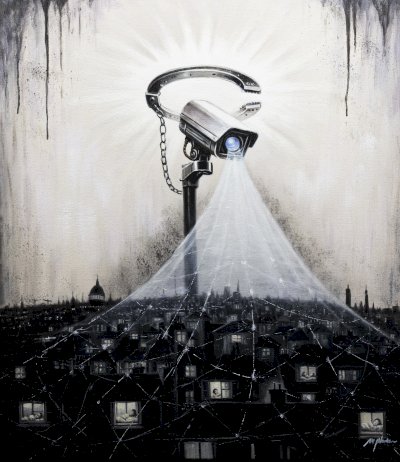




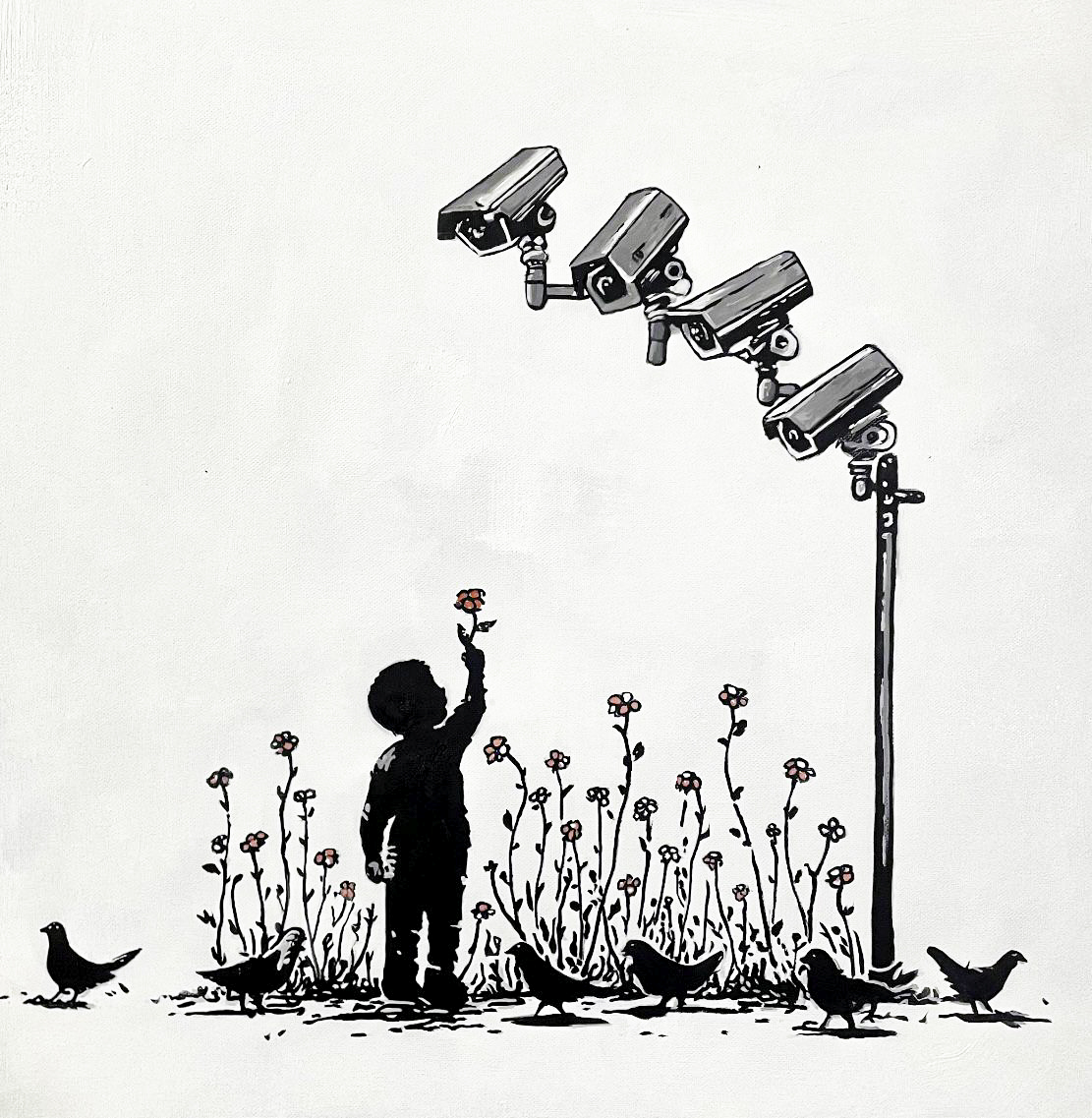
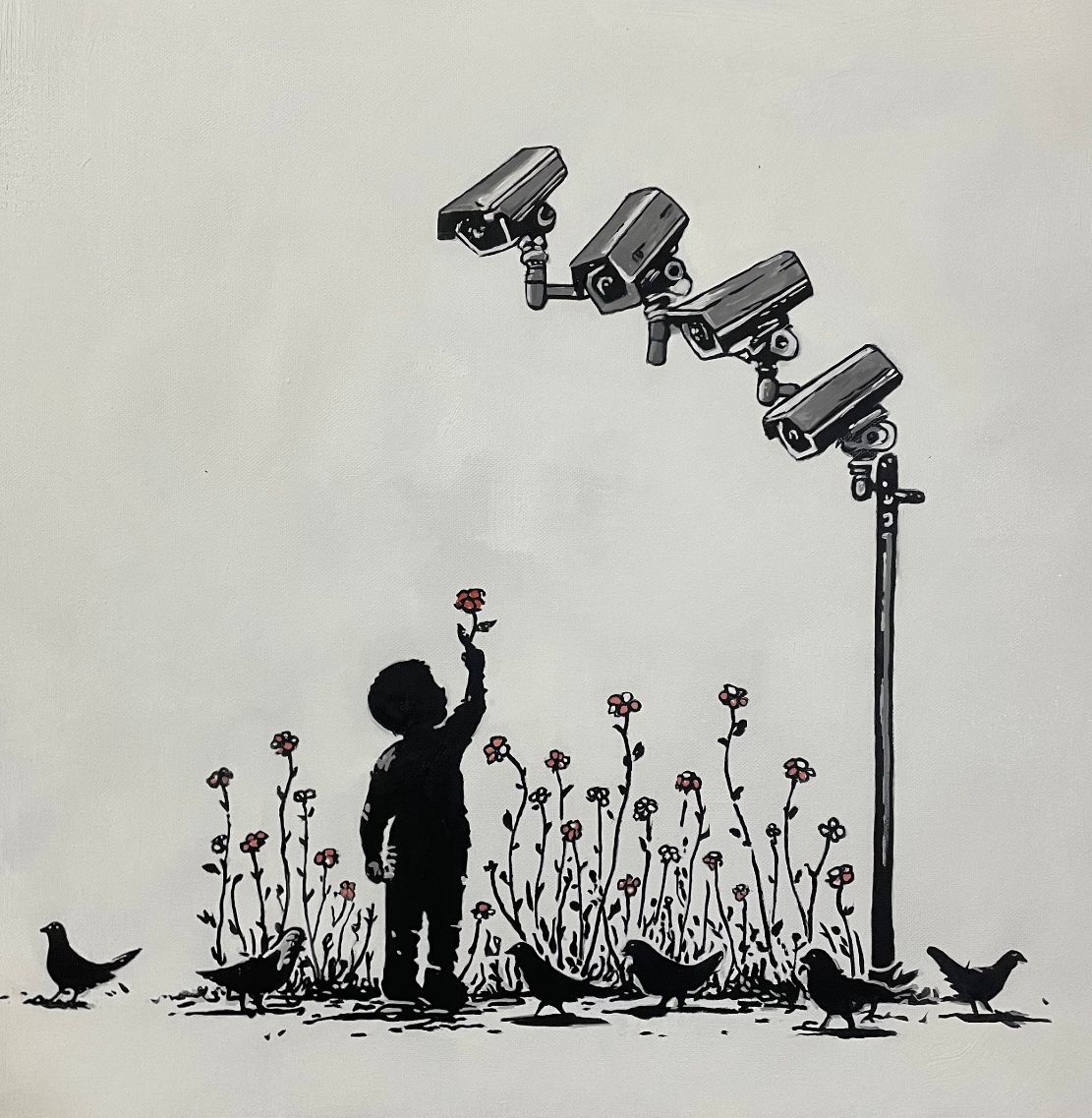
A child stands beneath a cluster of surveillance cameras, extending a single flower upward in a gesture of quiet offering. Around them, flowers bloom with camera lenses in place of petals, blurring the boundary between nature and observation. In A Flower for the Viewer, Mr Phantom addresses visibility, consent, and performance in a monitored world. The act is neither protest nor submission, but an acknowledgement of being watched. The flower becomes a question rather than a gift, offered not to another person, but to the unseen observer behind the lens. The work explores innocence in an age where presence is recorded, and humanity is shaped by constant spectatorship.