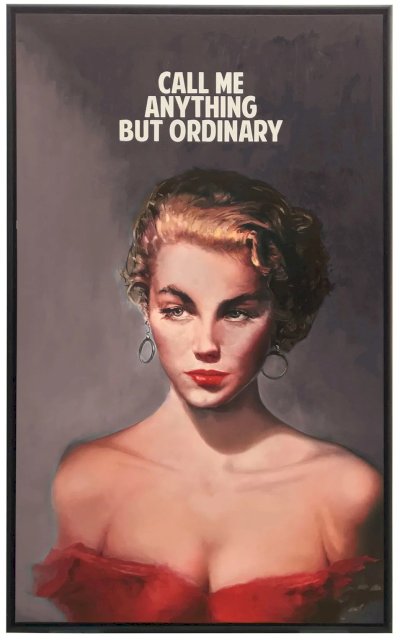






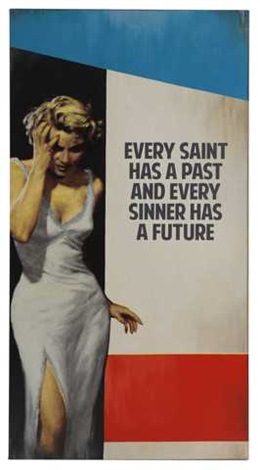
This work by The Connor Brothers draws upon the aesthetic of mid-century pulp fiction, presenting a solitary female figure alongside a stark, declarative text. The phrase suggests a nuanced view of morality, implying that virtue and vice are neither fixed nor absolute, but subject to change over time. Through its restrained palette and contemplative mood, the piece invites reflection on redemption, identity, and the complexities of human character.