

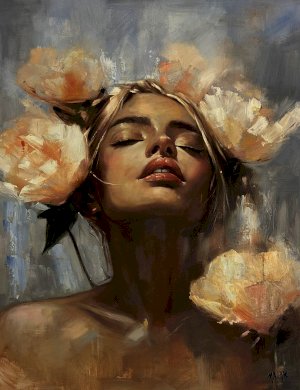



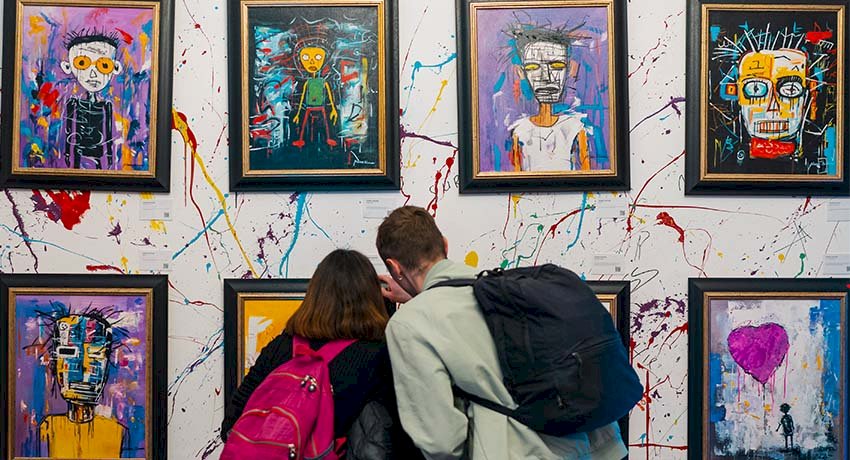
Romantic Surrealism in Contemporary Art has always been a collective. The most renowned artistic movement of the twentieth century, Surrealism, emerged in Paris and, through a reconsideration of value systems in the aftermath of the First World War, shaped the century like no other.
Andre Breton identified Surrealism’s relative values in relation to classicism and romanticism, arguing that Surrealism was part of the long history of the Romantic movement. It has a complex, fascinating and paradoxical relationship with art. Today, the Surrealist art movement has earned a reputation as a haven, largely because of its origins: its formation and the interests of its founders were shaped by collectors.
Secondly, despite Surrealism's international fame for its visual manifestations, it was never just an art movement. It cannot be identified by any particular style, unlike, say, Cubism or German Romantic Expressionism. Romantic Surrealism in Contemporary Art is a category of Surrealism, but it involves many kinds of these “isms”.
Selected Surrealist masterpieces by Max Ernst, Meret Oppenheim, René Magritte, Salvador Dalí, Valentine Hugo, Toyen, André Masson, Paul Klee and many more demonstrate that, alongside poets including Novalis, Achim and Bettine von Arnim, Friedrich Hölderlin, Heinrich von Kleist and Karoline von Günderrode, the great Romantic painters such as Caspar David Friedrich (1774–1840) and Philipp Otto Runge (1777–1810) also played an important role in the search for a revolutionary new art form in the twentieth century.
Understanding Romantic Surrealism in Contemporary Art
The Surrealists of the 1920s rocked the traditional art world with fantastical, dream-like imagery, inspired by the power of the subconscious mind and the imagination. Artists like Salvador Dalí, Max Ernst, René Magritte and Joan Miró were inspired by Dadaism, the avant-garde movement born of the creative disdain for World War I and the ennui of the middle class.
The group used Dada as a jumping-off point to delve further into the bizarre without the confines of tradition, thereby creating the Surrealist movement. Their work challenged not only preconceived notions in art but also raised questions about social mores, popular culture, and politics across Europe and eventually in the United States.
Fusing free society, poetry, subconscious ideas, and new methods, the Surrealists created their own language of art, producing numerous modern masterpieces that are highly regarded in art history today. The eclectic days of Dalí may be over, but emerging surrealist artists are continuing the dream, creating new Surrealist art escapes for collectors and enthusiasts alike.
Surrealism represented a Romantic current in the twentieth century that continues to reach its highest expression. Modern surrealist paintings, also known as contemporary surrealist paintings, are today’s answer to the 20th-century surrealist movement.
It is true of Surrealists, whose focus on altered states of consciousness, interest in the occult, ironic point of view, and antibourgeois attitudes determined their styles. German Romanticism emerged in the Resistance and among surrealists living under occupation and in exile during the Second World War, and articulated ideas about the cosmos, nature, dreams, inner visions, and community, as reflected in the activities of the Surrealists between 1924 and 1966.
What Defines Romantic Surrealism Today
Modern romanticism of the Surrealists is not the same as that of the poets or thinkers of the nineteenth century. Many emerging surrealist artists have incorporated modern elements into their work, such as using digital techniques to add fantastical elements or using their work as a statement on current issues.
Modern surrealist paintings have retained many of the basic components of traditional surrealism, such as symbolic and dreamlike imagery, exploration of the subconscious, and juxtaposition.
Some have expanded the definition of Romantic surrealism 2023 to encompass everyone from the first-generation artists directly associated with André Breton, the movement’s founder and author of the pivotal 1924 Surrealist Manifesto, to contemporary artists inspired by the movement.
Surrealism’s principles have become more inclusive through the use of new themes by emerging surrealist artists exploring symbolic and dreamlike art narratives, and its creators, such as Angelo Accardi, are reinterpreting Surrealism for contemporary audiences, merging historical references with digital innovation.
In today’s hyper-digital, globalised world, the appeal of Surrealism continues to grow, and emerging surrealist artists are using themes such as dream exploration to deliver contemporary floral surrealist art, Surreal botanical artworks, and hidden societal and political messages, exploring deeper psychological truths that resonate with contemporary cultural movements.
Modern surrealist paintings also draw on symbolism that depicts personal states, emotional transformation, identity, and humanity's relationship with nature. They may include symbols like mirrors or stairs to convey layered meanings, encouraging reflection that sparks curiosity. Traditional surrealists used brushes, paint, pencils, and charcoal; modern digital surrealists typically work with a graphics tablet and software.
Romantic Surrealism vs Traditional Surrealism
Romanticism in the nineteenth century is a traditionalist reaction against the French Revolution, in which specialists in literary history and the history of political thought came together. It involves a simple formulation. Rather, Romanticism nurtures all fields of culture.
Romantic Surrealism in Contemporary Art worldview extends from the second half of the eighteenth century to today, and it sparks a revolt directed against modern industrial civilisation, in the name of certain social and cultural values of the past.
The Surrealist movement’s opposition to capitalist civilisation is neither reasonable nor moderate; it is radical. The founders of Surrealism in one of their first documents, “Revolution Now and Forever” (1925), said, The Surrealist passion for premodern cultural styles is selective, it is based on the Kabbala, primitive art from Oceania or America, and Celtic art. and its terrain are aimed at exceeding the limitations of “art” to make art a separate, well goverened ornamental activity that enables it enter the limitless adventure of the reenchantment of the world.
The Emotional Appeal Driving Romantic Surrealism’s Popularity
Surrealism and Romanticism are tied; while they may not create a balance, they coexist through a myriad of opposing sentiments and sensations that may lead to harmonious interaction or reveal a projection of personal or internal symbolism. Although the dream theme in art has been reinvented over the years, modern surrealist paintings continue to depict it. Representations of dreams are abundant, and artists draw clear inspiration from past movements.
Surrealism and German Romanticism together form a new perspective, Romantic Surrealism, grounded in familiar works. Surreal romanticism is embodied in many forms; it sometimes depicts an intimate journey – a journey of passion through an emotional surrealism art, or it can depict a transitional, detached process.
They have been categorised into three types - Classic Surrealists (the core group of Magritte, Salvador Dalí, Max Ernst, etc), Transitory Surrealists (Modern surrealist paintings aligned with the Surrealists like Pablo Picasso, Alberto Giacometti, and Alexander Calder), and Contemporary Surrealists (Modern surrealist paintings influenced by Surrealism, which draws into its remit everyone from Les Lalanne to Glenn Brown and Adrian Ghenie).
Romantic Surrealism 2023 forms, by its methods, its artistic or political choices, its outward manifestations, real or imaginary, or romanticism in opposition to the melancholic mood of despair and the disenchantment of the world.
Romantic Surrealism and Current Contemporary Art Market Trends
Surrealism maintains its dominance in contemporary art while evoking the mysterious, incomprehensible beauty of the subconscious mind, full of creativity and inspiration. With perfect harmony, surrealism has found a place between rational vision and dreams.
Many of the world's leading museums, such as the Tate Modern in London and the Art Centre in Seoul, include surrealism and its leading artists in their exhibitions. As a trend, surrealism draws its strength this year from works that place particular emphasis on collective emotion, politics, and feminism.
As a product of modern freedom of expression, abstract art, with its striking effects, reflects its demands to be seen on a maximised scale. Romantic surrealism 2023 works express an intuitive use of shape, colour, form, and line in their abstract imaginings; it will be a trend in the coming years, especially given their large scale.
How Romantic Surrealism Aligns with Global Art Market Demand
A report by Sotheby’s Financial Services on the Surrealist market (ArtTactic ahead of the Karpidas sale) found that, between 2018 and 2024, Surrealism’s art collectors market trends share nearly doubled, rising from 9.3% to 16.8%, helped by numerous artist records set in 2024, such as the $121.2 million achieved for René Magritte’s L’empire des lumières (1954) at Christie’s New York last November – the highest auction price ever for a Surrealist work.
Influence of Modern Culture on Romantic Surrealist Art
There exists a thematic relation between romanticism and surrealism that has been an important source of motivation for surrealist artists. The theme of German romanticism was found in André Breton's 1924 surrealist manifesto, which combined dreams, the supernatural, and nature in transition, linking the two art movements, romanticism and surrealism.
The revolutionary ideas of the Surrealists, like the Romantics, are more significant than the transformation of social or political structures. Romantic surrealism includes a revolutionary transformation that breaks the chains of restrictions. Modern surrealists use digital manipulation to blend dreamlike visuals with virtual aesthetics. Modern surrealist paintings reflect how digital technology reshapes perception and reality.
Artists create surreal experiences with new technologies, including virtual reality installations that use AI-generated landscapes.
Crossovers Between Romantic Surrealism and Digital Art
Digital art movements sparked a new wave of creators sharing dream-inspired content with audiences worldwide. Digital surrealism differs from traditional surrealism in that it employs digital technologies to create artworks.
While digital culture overwhelmed all aspects of life, destroyed human feelings, and burdened people with enduring the fourth and fifth-generation wars, the emerging surrealist artists returned to themselves to find in it a more sincere field in which to express their pain, suffering, and dreams.
Creating surreal digital art requires at least as much skill and practice as traditional art. Emerging surrealist artists not only need to learn the skill of creating surreal images, but also to master their software app.
Why Romantic Surrealism Appeals to New and Young Collectors
Christie’s London, which has championed the auction house’s Surrealist sales since 2000, and its latest sale, held in March 2025, was our strongest ever – it took off like wildfire. Surrealism is widely considered the single most important art movement of the 20th century, and many contemporary and postwar art collectors today buy it.
The Rome-based gallerist Mattia De Luca has noticed interest peaking over the past three years. He finds curiosity and opportunity, as well as comfort, in certain historical artists’ markets.
Experts find that the current art collectors market trends are driven by younger buyers and burgeoning collectors shifting away from the very speculative contemporary and emerging markets. It is also reflected in the competition among auction houses for estates and collections of this kind of material.
Emmanuel Di Donna, the founder of the Di Donna Galleries in New York, has watched Surrealism's market trends steadily grow over the past 30 years. He remembers working on the first Surrealist sale at Sotheby’s in London in 2000, when Magrittes that are now worth $4–$6 million sold for $600,000- $800,000.
The market has broadened. Romantic Surrealism in Contemporary Art was once limited to Magritte and Dalí, but there is now a growing interest in female Surrealists and Surrealism in Mexico.
Romantic Surrealism as a Fine Art Investment Market
As Boyd-Bowman suggests, the definition of Romantic surrealism 2023 has been expanded by some to encompass everyone from the first-generation artists directly associated with André Breton, the movement’s founder and author of the pivotal 1924 Surrealist Manifesto, right up to contemporary artists inspired by the movement which was applied in a report by Sotheby’s Financial Services on the Surrealist market, published in conjunction with ArtTactic ahead of the Karpidas sale that found between 2018 and 2024, Surrealism’s market share nearly doubled, rising from 9.3% to 16.8%, helped by numerous artist records set in 2024, such as the $121.2 million achieved for René Magritte’s L’empire des lumières (1954) at Christie’s New York last November 2024 – the highest auction price ever for a Surrealist work.
The Future of Romantic Surrealism in the Contemporary Art Market
Breton’s speeches and manifestos did not claim that Surrealist work reflected a Romantic worldview across multiple styles; rather, they were most specifically tied to the German Romantics. The future of Romantic Surrealism in Contemporary Art Market will be determined by its renewed relevance today, as contemporary artists refer to and reinterpret it in light of the concerns and sensitivities of the 21st century.
On September 17, 2025, the market confirmed the appetite for Surrealism in times of global uncertainty when at Sotheby’s London, collectors from around the world bid for Pauline Karpidas, going on the block - the single-owner sale achieved a white-glove finish at £73 million ($100 million).
Cross-category bidding was conducted for more than one work, with at least seven contenders, and 70 per cent of the lots gained over their high estimates. As anticipated, the sale secured its place as the most valuable single-owner auction in Europe.
Twenty-three Surrealist masterpieces together earned £30.2 million. The collection offered Surrealism’s signature aspects as beauty, romanticism, drama, and pain, shadowed by subconscious emotions, depicted through symbolic language.
Romantic Surrealism’s Role in the Next Art Market Cycle
Fine art investment trends include market architecture, leverage, board memberships, exhibit underwriting, and data-driven acquisitions; one of the most evident art market trends in 2025 is the growing interest in surrealism. It clearly shows how collectors are investing in fine art, exploring the mysteries and dreams of Romantic Surrealism and offering a sense of escape from the complexities of modern life.
Romantic surrealism 2023 is booming again, not only in its dominance but also in major exhibitions from previous years celebrating the movement's 100th anniversary and Breton's manifesto. It is considered spiritual and emotional art, born in the 1920s, that continues to captivate with its ability to explore the unconscious and challenge the conventions of reality.
FAQ: Romantic Surrealism in the Contemporary Art Market
What Is Romantic Surrealism in Contemporary Art?
Romantic Surrealism in contemporary art is based on supernatural and irrational dreams and chance, a feeling of community, and encounters with a changing natural world, which were vital sources of inspiration for German Romanticism and, a century later, shaped international Surrealism in different ways.
Why Is Romantic Surrealism Popular in Today’s Art Market?
Romantic surrealism 2023 manifests in many forms; it depicts an intimate journey – a journey of passion and emotional surrealism- or it can be transitional, detached, or both, and it connects with young and old collectors. Regional galleries are exhibiting such works, and museums have seen an increase in surrealism-focused exhibitions since 2022.
How Does Romantic Surrealism Differ from Conceptual Art?
Romantic Surrealism in Contemporary Art is what the contemporary artist inherited from the philosophy of the surrealist trend in art. Romantic surrealism 2023 is a rich and broad field because it was not just about plastic art; it was a revolution that applied itself to poetry, politics, literature, cinema – a vast theatre of operation and influence- and emerging surrealist artists are trying to incorporate such features into modern surrealist paintings.
Is Romantic Surrealism a Good Art Investment?
Yes, romantic surrealism is a good art investment. Gallery representation has increased, and surrealist pieces in investors' portfolios have outperformed their contemporary art index by 34% over three years (Artprice’s 2024 Contemporary Art Market Report).
Who Collects Romantic Surrealist Art?
World-renowned museums, such as the Tate Modern in London and the Art Centre in Seoul, auction houses, institutions, and private collectors acquire works of Romantic Surrealism in Contemporary Art.
Is Romantic Surrealism Still Relevant in Contemporary Art?
Given the movement's association with artists, best known internationally through its visual manifestations, Romantic Surrealism in Contemporary Art cannot be identified by any single style, unlike, for example, Cubism or German Expressionism. Yes, romantic surrealism is still relevant in contemporary art. Romantic surrealism 2023 has had a complex, fascinating and paradoxical relationship with art.
