

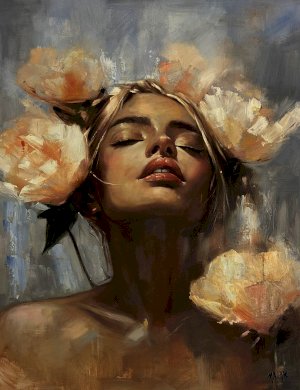



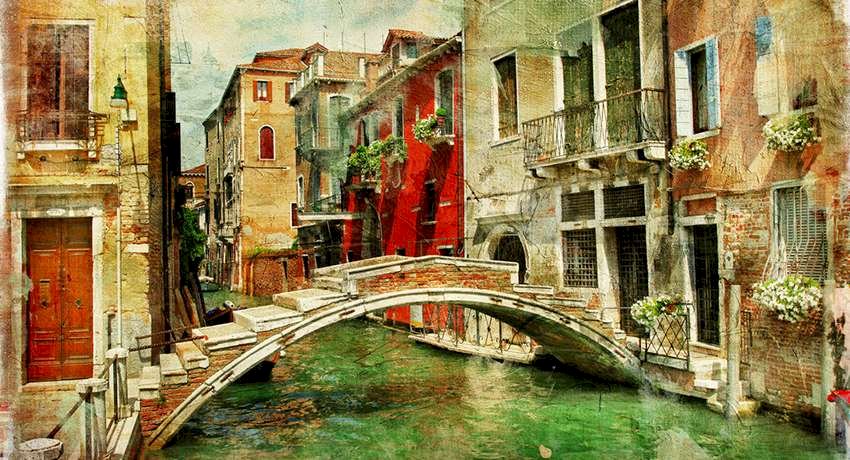
Representational art is the most common form, focusing on capturing the appearance of subjects such as portraits, landscapes, and still life, making it highly relatable. For instance, impressionist artists such as Renoir and Monet used patches of colour to create visually compelling, representative paintings of gardens, people, and locations.
Representational art depicts identifiable objects, scenes and people; unlike abstract and non representational art, which is categorised as modern art, it uses shapes, lines and colours to depict tangible subjects.
In particular, representational painting and sculpture are created by accurately copying real objects and depict easily identifiable subjects, such as a tree, a landscape, fruit, or a figure in a portrait. Historically, humans who make art use symbols and non-figurative art to represent something. Most historical works are representational, and representational is the oldest, striving to represent reality.
Representational Art: Definition, Examples & Complete Beginner's Guide
Art can be abstract, non-objective or representational. Art types such as abstract art never replicate reality, and non-objective art explores colour, texture, and visual elements without reference to the natural or constructed world.
Representational artists try to draw, paint, or build artwork that may look precisely like the object they are representing, or that depicts reality. Nowadays, artists use digital tools to offer a wide range of options for capturing and creating realistic images.
What Is Representational Art? Meaning, Types & Famous Examples
Representational art is a term for artworks that depict everyday objects and urban settings. According to the representational art definition, it is recognisable and depicts actual subjects or objects from reality. It can be so naturalistic that it deceives the spectator's eye, seeming real even though it is not. It is referred to as figurative art, which may not always be true to life, but is recognisable to the observer.
Ancient representational painting dates back to the Stone Age, between 2,000,000 and 10,000 B.C.E., when we find many sculptures and busts depicting personalities, Gods, and scenes from real life and nature. In the Middle Ages, such artworks were found in a religious context. The most common representational status in early art periods was equestrian statues.
In the Renaissance period, artists such as Leonardo da Vinci and Michelangelo created extraordinary, realistic and intricate sculptures and paintings on the ceilings of historical sites. In the 19th century, a new way of representing art was experimented with, in which the subjects shifted from landscapes, religious subjects, and portraits of leaders to socially relevant topics such as the Industrial Revolution and inequality.
The opposite of representational is complete abstraction, in which the lines, colours, and shapes focus on the artwork rather than any existing thing. It is known as non representational art. The painting by Wassily Kandinsky, The Rider (1911), is a great example. Kandinsky intended for this composition to represent something which already exists.
Key Characteristics of Representational Art
The depiction of subjects from the real world characterises representational painting. The elements are accurate shapes, colours, lines and forms that resemble the real-world counterparts. The artists use objective art elements to allow viewers to depict subjects.
It represents something which is from the natural world and includes Realism (accurate depiction of life), Impressionism (focus on light and emotion), and Naturalism (faithful to appearance without idealisation).
It fosters emotional and intellectual engagement, allowing viewers to relate to scenes that mimic reality.
The artworks can be portraits (people), landscapes (land), seascapes (sea), and still life (inanimate objects).
It inherently communicates straightforwardly with the audience, appealing directly to familiar imagery and concepts.
The realism depicted in such works is highly detailed and precise, and in some cases, it portrays recognisable depictions.
Representational painting creates an identifiable and relatable connection to physical reality, and in some cases, it can use a stylised or exaggerated version.
Types of Representational Art
Realism and Naturalism: The work portrays subjects as they appear in everyday life, focusing on details, accuracy and realistic proportions.
Photorealism: It is a highly technical, specialised form in which artworks are created to look indistinguishable from photographs.
Impressionism: It focuses on capturing the "impression" of a scene, with shifting light and colour intensity, often with loose brushwork rather than fine detail.
Idealism: It can be a classical sculpture or a Renaissance painting depicting beauty and peace.
Stylisation: It describes changes in object forms, colours, or proportions for artistic effect or simplification, often slightly different from perfect naturalism.
Surrealism: It represents realistic objects in dream-like, irrational, or bizarre scenarios.
Expressionism: Expressionism portrays real-world objects in distorted form and colour to express emotions or inner experiences.
Representational Art Examples (With Explanation)
Some Representational Art Examples are listed here.
Leonardo da Vinci: Mona Lisa (1503) – It depicts lifelike qualities and an enigmatic expression, showcasing extraordinary skill in creating human anatomy and psychological depth.
Johannes Vermeer: Girl with a Pearl Earring (1665) – It shows exquisite realism, subtle in colour, and expresses profound intimacy, with meticulous details and a soft portrayal of the Dutch Golden Age.
Paul Cézanne: Four Apples (1881) - It is an oil on canvas painting that is a still-life, demonstrating the rejection of thick brushstrokes and strong contrasts of light and shadow. The artists did not fully focus on the objects' colours, leading to incredibly naturalistic work in which Four Apples, as shown, are depicted as four circles in the middle of the canvas, exactly as they appear. No one can mistake it for anything else.
Joaquín Sorolla: Valencian Fishermen (1895) - The work, created during the Impressionist movement, portrays exactly what it is labelled: two men standing at the water's edge working with dishing equipment.
Sir Stanley Spencer: Turkeys (1925) - It accurately depicts animals in a realistic and representational style. Sir Stanley Spencer portrayed turkeys in the background of someone's garden, with the animals as the focal point of the painting. No one can misjudge the subject matter, especially after seeing the work's simplicity.
Algernon Newton: The Surrey Canal, Camberwell (1935) - It represents the canal, not just a landscape, but also the building overlooking it and its details, just like a photograph. It is a great example of representational painting because it shows the clarity with which it has been painted.
Caravaggio: The Calling of St Matthew (1600) –It is a hallmark of the Baroque representational painting. The Calling of St Matthew" shows biblical narrative and makes dramatic use of light and shadow to depict emotion and enhance the overall realism.
Rembrandt van Rijn: The Night Watch (1642) - The work features light and texture, as well as detailed character studies, giving the painting a strikingly authentic feel. The work demonstrates his mastery in creating lifelike representations that are both vital and realistic.
Edward Hopper: Nighthawks (1942) – It captures the essence of modern life with meticulous attention to detail and emotional resonance. It portrays urban isolation through the representation of a late-night diner, a recognisable, deeply evocative scene.
Representational vs. Non Representational Art
To understand representational art definition one must first appreciate the difference between representational and traditional representational forms, in which the themes from the artist's viewpoint vary greatly. While representational painting visually describes the world we perceive, non representational art exists independently of it, often prioritising form over subject.
Non representational art uses abstraction within the artwork. Its examples include works that depict no real-world objects; instead, mere shapes, colours, lines, or other forms are used to convey the artist's abstract ideas. The elements are used to express emotions and feelings.
Representational painting draws viewers in with familiar visuals, allowing them to connect emotionally to known subjects. In contrast, Non representational art invites interpretation, eliciting a more introspective response to its elements.
The line that separates representational from Non representational art is very thin, and sometimes it overlaps. So, in many paintings, audiences and critics may have their own opinions about how to classify the artwork.
In representational painting, a tree can be represented through a standard characteristic, or it can be used to identify an object as a tree within an abstract context where a tree could never be found. Traditional representational painting used atmospheric perspectives and colours to create the illusion of 3D realities on canvas.
The knowledge and ability to create realistic depictions have grown over the centuries, and non representational art is based on imagery and elements drawn from the real world. Still, the relationship to the visible world may be different.
Famous Representational Artists
- Leonardo da Vinci (famous Mona Lisa painting),
- Rembrandt van Rijn(light and shadow in The Night Watch),
- Caravaggio (biblical scenes in The Calling of St Matthew),
- Francisco de Goya (works show realism and romanticism),
- Edward Hopper (American realism),
- Norman Rockwell (depicts detailed American life),
- Frida Kahlo (painting on intimate autobiographical themes),
- Alex Katz (modern figurative paintings).
Representational Art vs Abstract Art
Non representational art is often used as a synonym for abstract art. Non representational art did not emerge until the start of the 20th century. After the rise of the German Expressionist movement, the demand for abstraction grew.
The true-to-life works were facing immense pressure from other artists, and many such antiquated works had little scope for intellectual possibility. Since non representational art resembles abstract art, the type of artwork makes no references to anything remotely recognisable in the real world.
The aim is to create something which has a hidden meaning that is intellectual by definition, as it does not make references to any distinguishable objects that require the audience to consider the work in order to form an interpretation.
Representational art painting focuses on the "what" (a known subject), while abstract art focuses on the "how" (line, colour, emotion). It acts as a mirror, whereas an abstract is open to broad interpretation and focuses on the artist's internal vision. It uses continuum style, which exists on a spectrum which can be abstracted from a real object.
History of Representational Art
Representational painting can be seen in prehistoric caves, where depictions of humans, animals, and everyday life activities are found. It was seen throughout history, from ancient Egypt and classical Greece to the Renaissance and beyond, when it was applied in sculptures and paintings as a central theme—the 20th-century modern art movements, like Cubism, supported by Pablo Picasso, combined representation with abstraction.
Some examples include sculptures, decorative friezes, busts, and bas–reliefs of real people and religious subjects. During the Middle Ages, European artists focused on religious subjects, and during the Renaissance, artists such as Michelangelo and Leonardo Da Vinci created extraordinarily realistic paintings and sculptures.
Nobles and royal personalities often commissioned the artworks. The artist did workshops and trained apprentices to create their own style.
During the Renaissance, representational painting flourished, reaching an extraordinary level of accuracy in depicting perspective, objects, animals, nature, and the human form. The trend continued in the Baroque period, enhancing drama, and later, the movements such as Romanticism and Realism in the 18th and 19th centuries, respectively, shifted representation to reflect socio-political contexts.
Towards the end of the 19th century, Impressionist painting dominated the movement that began in 1860. The artists were also exploring new subjects, including socially relevant topics and those related to the Industrial Revolution. The artworks depicted realistic places, objects, and people in struggle, and the paintings were free-flowing and loose, with artists adopting different styles based on recognisable forms and objects.
The famous Representational artists of the era included Edgar Degas, John Singer Sargent, Wassily Kandinsky, and even Vincent van Gogh. So the artists created representational abstract art, which was modernised and reinterpreted in terms of its subject matter, as seen in the artworks of Pablo Picasso.
Picasso's blue and rose period was mostly about realistic, naturalistic painting, and then during the Cubist period, he began working in abstraction. Picasso's Cubist period artworks make up most of the non-representational paintings ever created.
At the turn of the 20th century, the art movement began to reject the representational approach, and German Expressionism emerged. By the early 20th century, a massive increase in abstract art was evident.
Techniques Used in Representational Art
The techniques used in representational art painting are
Perspective: The artist uses linear perspective to create a 3D illusion on a 2D surface by employing a vanishing point.
Light and Shadow (Chiaroscuro): The contrast between light and dark creates volume and depth, defining the form of objects.
Colour theory and application: The artist mixes colours to create a natural, realistic appearance that evokes a specific emotion, mood, or perspective.
Layering and glazing – Glazing and layering can be used to achieve greater depth and luminosity.
Brushwork and texture- Calculated brushwork can be applied to get a specific texture, such as the difference between smooth skin and rough fur.
Proportioning and sketching: Sketching can be used to achieve accurate proportions.
Underpainting: It creates a foundational monochrome sketch on the canvas, establishing the composition and design.
Sfumato - Sfumato can be used to create a hazy, soft transition between colours, as seen in Leonardo da Vinci's artworks.
Grisaille: It is the technique of using shades of grey to establish value and form, before adding colours.
Why Representational Art Is Important?
Representational painting provides a powerful means to communicate complex narratives and to offer an authentic portrayal of different eras, historical societies, and cultural values. It connects viewers directly with the real world, allowing them to interpret and relate their experiences to their surroundings.
It depicts recognisable objects and people. Landscape and engages with a broad audience without requiring specialised knowledge.
The art validates the viewer's existence by showing human life, promoting empathy, and reflecting our real selves.
It conveys the messages of overlooked communities and combats stereotypes.
It depicts real objects and scenes, preserving moments and realities for future generations, thereby improving understanding and appreciation of historical and cultural heritage.
It demonstrates the appreciation of the skill with which the artist captures the subject. Some works provide precise mathematical details of the landscape that can be used to examine a scene.
It shows familiar objects and figures, and enables immediate connections, fostering empathy, reflection, and dialogue among audiences. It remains relevant and essential to human communication and cultural expression.
How to Create Representational Art (Step-by-Step Guide)?
To create a representational art painting, follow the steps mentioned here.
First, choose a still life, landscape, or figure to create a representational painting.
Measure the subjects carefully to ensure they are accurately sized relative to one another, then use perspective to create a sense of distance.
Begin by observing and sketching your subject, breaking it down into basic geometric shapes, and ensuring accurate proportions.
Lightly sketch the basic shapes and structure before going into the details. Apply colours to resemble the actual subjects, and use colour mixing to achieve perfect tones in representational painting.
Use different techniques such as chiaroscuro, add mid-tones and colours, refine details, and finally draw the highlights and deep shadows.
Paint layers and refine pencil strokes to capture the subject's texture and create true-to-life figures.
Common Mistakes in Representational Art
Common mistakes made by artists in representational art painting are listed here.
Failing to break the scenes into distinct light and dark shapes results in a flat, chaotic representational painting.
Symbols can be used instead of complex shapes, angles, and shadows to present the subject perfectly.
Incorrect ratios or perspectives, a lack of structure, and ignoring colour management and alignment lead to inaccuracies.
An unorganised composition and inconsistent style can make it difficult to match the work to real ideas or objects.
Overworking details in a representational painting leads to chaos and dull work.
Tips to Improve Representational Art Skills
- Do not use a main subject in a representational painting that is too large, as this can lead to ambiguity and inadequate space.
- For the initial blocking-in stage, focus on big shapes and simplify values into a limited number (three or five) of large areas (light, halftone, and shadow) before adding details.
- Draw from direction observation to depict accurate structure and anatomy, rather than relying on symbols.
- Use a mirror to check the compositional flaws.
FAQ
1- What Is Representational Art in Simple Words?
Representational art painting depicts realistic figures and objects that are idealised, distorted, stylised, and appear as they are in the world.
2- What Are Examples of Representational Art?
Some examples of representational painting are Mona Lisa by Leonardo da Vinci (Portraiture/Realism), Girl with a Pearl Earring by Johannes Vermeer, The Night Watch by Rembrandt van Rijn, Nighthawks by Edward Hopper and The Calling of St Matthew by Caravaggio.
3- What Is the Difference Between Representational and Abstract Art?
Representational art captures the figure in the moment, while representational abstract art prioritises emotion, aesthetic expression and hypothetical interpretation.
5- 4- Who Are Famous Representational Artists?
Some famous representational artists are Leonardo da Vinci (Mona Lisa), Rembrandt van Rijn(known for light and shadow in work The Night Watch), Caravaggio (biblical scenes in The Calling of St Matthew), Francisco de Goya (works on realism with romanticism), and Edward Hopper (painted American realism).
6- Is Representational Art Realistic?
Representational art examples include any artworks that depict recognisable objects or scenes. Realism is a type of representational, but not all representational is strictly realism.
6- Why Is Representational Art Important?
Representational art examples play a vital role in documenting and reflecting cultural norms, ideas, and societal changes, allowing future generations to understand historical perspectives through artistic expression.
7- Can Beginners Learn Representational Art Easily?
Representational art examples serve as a starting point for all visual art, where artists can be evaluated on their drawing, compositional, and perspective skills, their use of colour, and their portrayal of light.
The skills required for creating representational painting serve as a foundation for all art education, ensuring the artist's ability to render their subject matter with precision and intensity, bridging the gap between art and observer.
8- Who Does This Work of Art Represent?
Representational art examples represent recognisable subjects from the real world, such as people, landscapes, objects, or scenes.
