

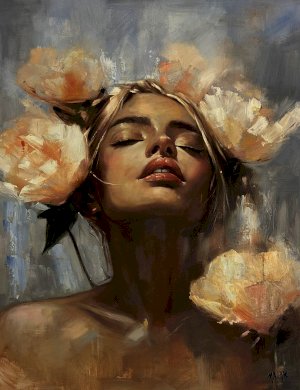


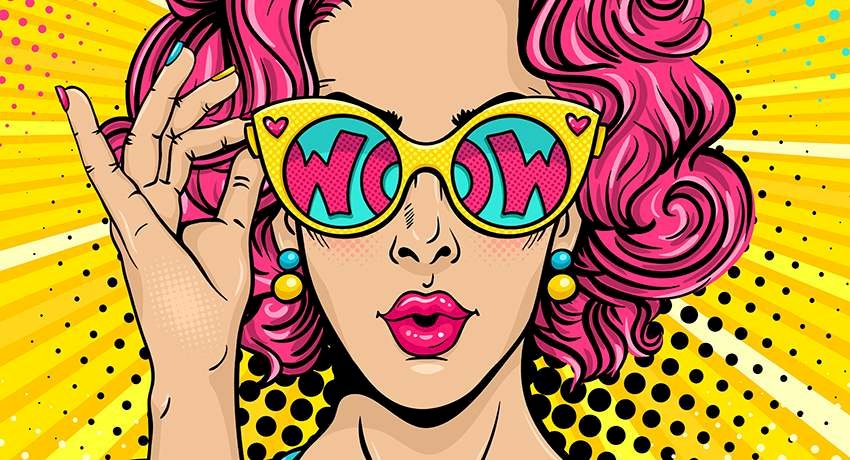
Pop Art is based on iconic contemporary designs and vibrant high contrast images, which can bring significant change to the look of your interior space. It includes the Graffiti -style prints that add a funky, professional atmosphere to your space. It drew inspiration from many styles and techniques.
It is seen as a contemporary artwork, the last of the modernist era, that used design to critique, comment on, and reflect on society through insightful observation. It glorified popular culture by elevating comic strips, hamburgers, and soup cans to the status of fine art.
The Pop Art movement emerged as a revolt against the prevailing traditional approach in the 1950s. It followed the modernist movements, continuing to disrupt the traditional notion of the abstract expressionist period, and rebelled against the esoteric vocabulary of expressionism.
The Abstract Expressionists created art understandable only to a select group of interested people. However, the masses recognised pop as part of mass marketing practices and consumer culture that emerged in the US after World War II.
Andy Warhol's screenprints of Marilyn Monroe and the Campbell's Soup Cans, as well as the use of mixed media and sculpture by artists such as Jeff Koons and Claes Oldenburg, are examples of pop art.
Pop Art: Custom Pop Art Portraits, Paintings & Wall Art What Is Pop Art and Why Is It So Popular?
The term first emerged in Great Britain, during a period of economic hardship following the world wars. In the late 1940s, the artists of the Independent Group began appropriating idealised images of American life from British magazines.
Pop Artwork is popular because it uses recognisable, relatable iconography and themes. It's easy for an audience to connect with the work because they often find familiarity within it. It is a popular choice for private collectors as well.
What Is Pop Art? What Influenced This Movement?
Pop Art artwork was defined as a mass-produced, low-cost, young, glamorous, transient, and expendable concept that used techniques such as silkscreening, bright colours, and collage to mimic advertising and comics. The subjects depicted were celebrities, consumer goods and comic strips.
The pop art movement was a colourful movement of the 1950s, a style that was radical and in stark contrast to abstract expressionism. In the late 1950s in America, the early pop art movement was fuelled by popular culture and by a return to representational art with hard edges and distinct forms.
In Britain in the mid-1950s, the movement was mostly academic and reached its peak in the 1960s.
Young pop art artists felt schools were not teaching art that was connected to their lives, and they were inspired to create works that changed the perception of popular art. Pop art style was not a rare masterpiece; it was mass-produced as a commodity, printed or handmade, and created at a lower cost.
Mixed media and collage were the predominant formats used to produce it. Pop art artists used it as a means for advertising and social critique. They broke down the barrier between high-quality, rare and commercial art at a time when commercial style was seen as low-standard work.
Comic books, films, product packaging, advertising, and commercial designs inspired pop art artists. Popular animated characters, such as Mickey Mouse and Richie Rich, influenced the designs.
What Is the History of Pop Art?
Pop art style dates back to 1917, when Marcel Duchamp asserted that any object, such as a urinal, could be art, and artists in the 1950s used this notion to challenge boundaries separating traditional art from everyday life.
Artists like Robert Rauschenberg used bed pillows, stuffed goats, and tyres in their paintings, merging painting and sculpture. Pop art style opposed Abstract Expressionism and proto-pop art, as artists applied paint to imitate the look of industrial printing techniques.
Post-World War II, enormous economic growth, driven by innovations in media and technology, led to consumer culture, mass production, and disposable income, which could be spent on everything from hairspray to washing machines.
Television and print advertising both emphasised graphic images and recognisable brand logos, which were often taken for granted in the visually saturated world. Pop art artists developed a distinctive style in the early 1960s that was embraced as both truth and a medium of universal expression.
The mid-1950s pop art style was developed by the independent group at the Institute of Contemporary Arts in London, when artists like Richard Hamilton and Eduardo Paolozzi used mass culture, technology, and commercial imagery to depict real-life concepts. In America, in the late 1950s, it was used to promote consumerism. The American Pop Art style was bold, directly critiquing trends and celebrating consumer goods.
Pop Art artwork was mass-produced at a low cost. The themes were young, glamorous, transient, and expendable, and it used bright colours and collage to mimic advertising and comics. The subjects depicted in the works were celebrities, everyday products and comic strips.
Our Custom Pop Art Service for Every Style and Space
Our Custom Pop Art artwork Service, whether for commercial or residential purposes, transforms photos of people, objects, and places into inspirational designs. Our playful, graphic style adds whimsy and energy to a photo, whether it is a portrait, still life, or landscape.
Each piece is designed to blend pop with high-fashion aesthetics and contemporary design, aligning with the art's purpose. You can get fashion-inspired or street art-inspired works. We also create custom-tailored artwork to suit your space, requirements, brand, and story.
We offer a variety of canvas prints, framed fine art, acrylics, gallery-quality wood, and floating frames. You can order extra-large portraits for living rooms or offices, as well as for luxury-inspired closets or boutiques.
Types of Pop Art: Pop Art Movement
The critics Lawrence Alloway and artist Richard Hamilton are credited with coining the term. The style was based on common themes and techniques inspired by the latest technical developments. The artists questioned the elite culture and rebelled against the predominant traditional fine art. The new ideas reflect viewers' general tastes.
- In 1956, Richard Hamilton (1922-2011), founder of the movement, described the elements of Pop art style as popular, expendable, low-cost, transient, mass-produced, glamorous, witty, sexy, and big business.
- In 1958, art critic Lawrence Alloway (1926-1990) used the term in his article. Since then, the term has been used to describe the coherent movement in which artists were not following a traditional style.
- Artworks created in the Pop art style employed commercial techniques like silk screening to produce replicas, and the use of repetition and mass production changed the narrative that art must be exclusive or rare. After the world wars, American society became more consumerist, and artworks were more democratised, becoming part of everyone's life and more accessible to the general public.
- Robert Rauschenberg(1925-2008) combined traditional painting techniques with found objects, creating 3D artworks that blurred the lines between painting and sculpture.
- Neo-Dadaism focused on the use of familiar objects. The style was employed by artists like Jasper Johns, who created paintings that depicted "Things the mind already knows," such as flags or numbers.
- Pulp culture was part of a movement that combined comic book characters and art into various media.
- Many pop art artists created multiple versions of the same artworks, and Andy Warhol's silkscreens were the most popular example of this.
- Pop Sculptures were also part of the Pop art movement, exploring similar themes in paintings but in different forms.
Pop Art Artists
Richard Hamilton was known for depicting the rebellious 1956 collage "Just what is it that makes today's homes so different, so appealing?"
The most famous Pop art style was seen in Andy Warhol's iconic Marilyn Diptych, the Marilyn silkscreens created in 1962. Andy Warhol created the screen-printed images of consumer products and celebrities. His Gold Marilyn Monroe reflects the inherent irony of Pop, given Monroe's suicide a few months earlier.
Claes Oldenburg used everyday objects and turned them into oversized sculptures. Oldenburg used simple things, like ice cream or a clothespin, and showed them in monumental proportions.
Roy Lichtenstein was known for a comic-strip style painting with bold lines and dots.
Sculptors like Marisol used the style in mixed media artworks, and Claes Oldenburg was famous for creating soft sculpture and everyday objects.
Pop Art Examples
Pop Art examples illustrate how it democratised art, making it more accessible and part of everyone's life. Such a style was famous for repetition and producing multiple copies. Many Pop art artists produced multiple versions, and some, like Andy Warhol's silkscreens, were repeatedly produced, which rejects the notion of art's authenticity and changes the narrative that it must be exclusive or rare.
He used the silkscreen technique to produce giclee prints of many famous personalities, including Elizabeth Taylor and Elvis.
Robert Rauschenberg combined traditional painting techniques with found objects, creating 3D Pop Art artwork that blurred the lines between painting and sculpture.
Pop Culture art adopted the style of another medium, such as comic book art, and presented it in a different medium. Roy Lichtenstein's Ben-Day dot paintings are famous examples of pop art that represent comic book art and pulp culture.
"Captain America" by Tommy was an example of mixed media.
Sculpture in the Pop art movement explored many themes, often based on everyday objects such as ice cream and clothespins, and some were created in monumental proportions.
Custom Pop Art from Photo – How It Works
The custom process for creating Pop Art artwork involves the following stages, starting with selecting a high-quality photo with good contrast between the subject and background.
Separating the background and the subject to allow for individual colouring. After removing the background, replace it with a gradient.
Apply bold, unnatural, vibrant colour palettes, remove image details, add bold black outlines, and add comic-book-style dot patterns for texture.
Replace the background with contrasting colours or bright geometric patterns.
Adjust layers and edges to ensure the image pops.
One can use Photo editing apps or tools to automate the photo editing process.
Why Choose Our Pop Art Service?
Pop art artwork celebrates and elevates everyday photos and portraits to the extraordinary. We personalise your pictures and paintings into dreamy watercolours or cartoons. Our tailored creations bring bold colours and designs to your work or home spaces.
Our team of professional designers creates specialised gallery-wrapped canvases, integrating a variety of pop styles, with options to adjust colours and facial details to meet your expectations.
We provide vibrant, stylish, high-contrast works that can energise the atmosphere and bring unconventional thinking to your space. We integrate playful, unique, unfamiliar shapes and designs to inspire creative artwork.
Pop Art for Home, Office and Commercial Interiors
Pop art style provides a bold, vibrant, and memorable interior for your workspaces. It is versatile and can be incorporated into a variety of designs, from modern and minimalist to vintage and eclectic.
Many pop art-style prints are inspired by comic books, Hollywood, advertising, and commercial products, adding a fun element to the residential space and an energetic atmosphere to offices and workplaces. The decor features retro-style pop murals, neon signs, and quirky decorative sculptures.
Pop Art Portraits for Gifts and Special Occasions
Pop Art Portraits for gifts and special occasions turn everyday pictures into unique art pieces. Personal portraits are tailored to the recipient's personality. Portraits are created with plain or coloured backgrounds, or a custom background, and feature bright, contrasting primary colours for a high-impact, energetic look.
Pop art portraits are ideal for anniversaries, weddings, birthdays, and other memorable, special occasions, as they add a contemporary, vibrant, and nostalgic flair to your spaces.
Handmade vs Digital Pop Art – Which One Should You Choose?
A handmade piece often uses 3D impasto, in which the paint stands out from the surface, and the brushstroke adds emotional depth and meaning to the work. Handmade items require longer production time and are limited in number.
They are often more expensive, whereas digital pop art is less expensive than handmade art. They are versatile, can be easily reproduced, offer perfect lines, colour adjustment options, and precision, and produce clean images, making them ideal for quick decoration.
Pop Art Sizes, Materials and Framing Options
Sizes are classified as small (5x7" to 8x10"), medium (11x14" to 16x20"), large (20x24" to 24x36"), poster size (A4 to A1), and custom size (with approximately 1 inch of extra white material around the edges).
The material used to make a gallery-wrapped canvas must be durable, high-quality paper with a matte finish, used for prints, and a laminated coating for protection against UV fading, dust, and moisture.
Acrylic or Plexiglass, wood panels, and high-gloss metal with a sleek finish can be used for glazing, and metal can be used for a high-gloss, sleek finish that enhances vibrant pop colours.
Acrylic frames can be chosen instead of glass to avoid breakage.
Flaster frames, bold, colourful neon, red, and high-contrast frames; minimalist, thin black or white metal and wood frames; and maters can be used to frame Pop Art artwork. Some frames come with pre-installed hardware which hooks for immediate display.
Canvas art represents unique design decisions that impact how the artwork functions in the space where it is displayed. Framing provides structural support and remains desirable in interior design and even personal spaces.
Best Occasions to Order a Personalised Pop Art
Whether you need a personalised Pop Art-style portrait to show gratitude, love, appreciation, or consideration, or you want to gift a pop art artwork as an exciting, distinctive way to present someone to celebrate a wedding anniversary, birthday, or special occasion.
You can gift as an artistic gesture to welcome someone into a new home; a pop art-style portrait holds the power to transform gift-giving occasions. It infuses a vivid burst of colour and unparalleled individuality, revealing vibrant, personalised artistic expression. These are the best tokens of affection, serving as a timeless declaration to honour significant milestones and personal victories in life.
Portrait Pop Art Pricing – What Affects the Cost?
The cost of pop art style depends on who is selling it and where it is sold. The primary market comprises sales from galleries and artists, and the secondary market involves the resale of artworks at auctions or through dealers.
The galleries represent the artists and help set prices based on reputation, education, quality of work, and market trends, and they set prices that reflect the artists' and their work's context. The secondary-market lots are priced based on rarity, historical significance, and demand.
Other factors that influence price are the medium, size, complexity and quality of the frame and canvas. High-quality canvas, larger, more complex pieces made by reputable artists often command higher prices.
How to Order Your Custom Pop Art Today
To order, select a service specialising in custom pop art artwork, choose from popular styles, handmade or digital prints, modern or comic styles, or other options, then select the size, canvas type, framing option, and colour palette.
You can request digital proof or a draft, allowing you to make changes before final printing. Once approved, the art is printed, packed, and shipped to customers or sent digitally.
FAQ
What Is a Custom Pop Art Portrait?
Custom Pop Art artwork is personalised art which transforms a photograph into an image inspired by the 1950s/60s Pop Art movement. It uses bright colours, high contrast, and halftone dots or stylised outlines for portraits, personalised gifts, pet art, and modern home decor.
Who Is Considered the Founder of Pop Art?
Andy Warhol is most commonly recognised as the "father" or leading icon of Pop Art style due to his widespread influence, fame, and iconic screen prints of American consumer culture in the 1960s. However, the roots of the Pop Art movement began in 1950s Britain, with artist Richard Hamilton often considered the movement's founder for defining its principles.
Can I Get Pop Art Made from My Photo?
Yes, you can easily transform your photos into Pop Art style using online AI tools, mobile apps, or photo-editing software like Photoshop to create Warhol-style portraits.
Is Pop Art a Good Gift Idea?
Yes, Pop Art artwork is an excellent, vibrant gift idea, especially for those who appreciate bold colours, nostalgia, and modern, lively decor. Its optimistic style makes it a popular choice for birthdays, weddings, or as a personalised gift.
Do You Offer Digital and Printed Pop Art?
Yes, we offer digital and printed Pop Art-style products. Digital pop art artwork is available as high-resolution files that can be purchased instantly. In contrast, physical artwork is a finished product that often comes with decorative canvases, framed prints, and posters, and is shipped to the customer's location.
How Long Does It Take to Create Custom Pop Art?
The time to create custom pop art artwork depends on the complexity, style, and type, as well as whether it is hand-painted or digital. It takes one to two days to create a professional digital portrait, while a custom hand-printed canvas requires extra drying time. Professional services take 3 to 5 business days, plus revision time.
Can I Order a Couple or Family Pop Art Portrait?
Yes, you can order a couple or family Pop Art portraits with customised backgrounds, or combine multiple photos into one portrait by uploading the photos and receiving a digital proof for approval.
Do You Make Pet Pop Art Portraits?
Yes, we make custom pet Pop Art portraits from photos.
What Size Options Are Available for Pop Art Prints?
Custom pop art prints are available in sizes ranging from small 5x7 inches to large 24x36 inches or 32x48 inches, depending on the requirements and display area, whether for interior decor or large-scale display.
How Much Does a Custom Pop Art Portrait Cost?
A custom pop art artwork in the UK costs £5-£35 for digital or basic prints, and £100–£800+ for hand-painted canvas commissions.
Is Pop Art Suitable for Office and Commercial Walls?
Yes, Pop Art artwork is best suited for office and commercial walls when used thoughtfully and carefully selected for the designated space.
Can I Request Revisions Before Final Delivery?
Yes, one can request revisions to custom Pop Art artwork before final delivery, as it is standard practice for design services and artists to offer revisions to ensure satisfaction with the final portrait.
