

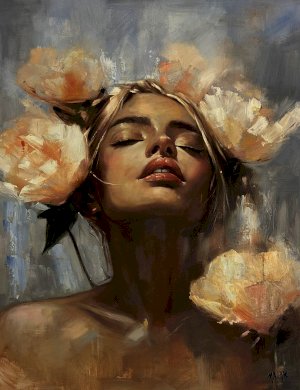



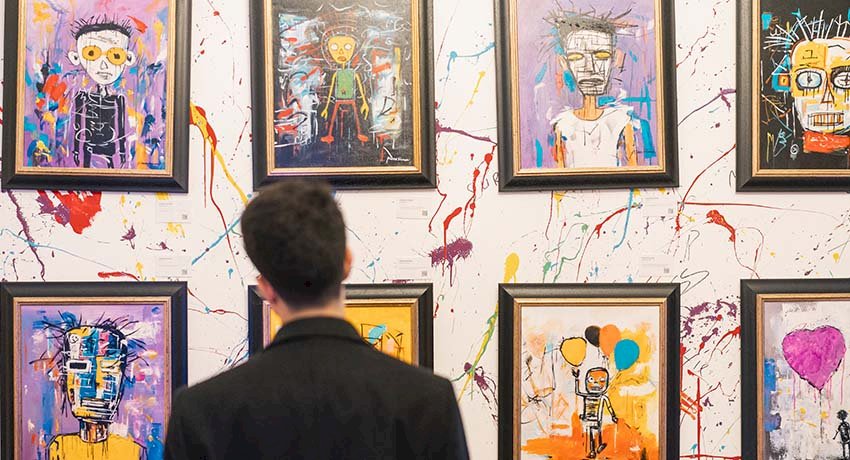
Liquid Therapy refers to the artwork by American artist Michael Godard, which features liquids, abstract liquid effects, fluid relaxation, and a playful escape through glowing liquid elements. It is a cocktail-themed contemporary art as part of the “Da Vinci Collection,” which is sold on paper by auction houses and galleries.
Jean-Luc Godard was famous for introducing revolutionary filmmaking rules through his radical experimentation during the French New Wave (Nouvelle Vague) movement of the late 1950s/1960s. Alcohol was not used to convey leisure and modernity in Godard films; instead, he used it to depict the rebellious spirit of his films, in which the music features characters who sip drinks while discussing critical societal and political problems.
In his personal life, Jean-Luc Godard cocktail culture was related to the literary and cinematic groups who shared drinks and intellectual and artistic views of mid-century European culture.
Bereft of point-of-view shots, visualised memories and dreams, appointments, and deadlines, these films bypass the commonplaces of modern movie storytelling. In that sense, cocktails in cinema are “objective” in their reliance on characters’ behaviour to convey the action. But that behaviour is often difficult to understand. The characters may be unidentified, inconsistent, or unrealistic in their actions and reactions.
Jean-Luc Godard and Cocktail Culture in Modern Cinema
Along with his counterparts François Truffaut, Eric Rohmer, Jacques Rivette, and Agnes Varda, Jean-Luc Godard set a new standard for cinema in 1959 with his feature debut, Breathless, which was a classic American gangster film.
In his films, he would depict complete fiction or create a documentary, using philosophical or political slogans alongside images to elicit critical reactions from the audience. He would present everyday activities, such as stirring coffee in a cup or a woman looking at a mirror. He would express his political leanings through artistic expression.
His influence on cocktails in cinema is evident in the fragmentation of narratives, and the music he often used depicted his philosophy and cultural interplay. Godard presented filmmaking through fragments of shots and plots, applying abstract concepts to explore contradictory themes, such as Masculine Feminine, thereby breaking cinematic conventions and motivating the audience to accept transformative, thought-provoking, and uncomfortable ideas.
Jean-Luc Godard cocktail culture infused personal vision into filmmaking, used unconventional editing and nonlinear storytelling with jump cuts, which were a hallmark of the American New Wave, and introduced meta cinema, in which actors broke the fourth wall and played the narratives on screen. His films criticised social and political structures and modern alienation.
Godard’s À Bout de Souffle depicted a revolt against the costume designer that was common in Italian neorealism and Dogme cinema, keeping with “both the aesthetic and industrial demands of the Nouvelle Vague" with the aim of promoting realism in the New Wave that transformed from its relationship with fashionable couture and brought fashion as inspiration in the street, with the purpose to promote the simplicity and naturalness in the aesthetic makeup and the outfits worn by the artists.
Godard transformed the way fashion was depicted in films in Le Mépris; he used various sounds and spaces, filling gaps with silence to play with materiality.
Liquid Therapy: Alcohol as Playful Symbolism in Godard’s Films
"Liquid Therapy" is not a cinematic technique by the legendary French filmmaker Jean-Luc Godard; it is Michael Godard Liquid Therapy, created by the renowned contemporary artist, who often depicts alcohol and playful "therapy" in his paintings.
By contrast, the filmmaker Jean-Luc Godard's cocktail culture was based on a range of cinematic experiments and innovations that layered images, sounds, and elements such as fluids.
Godard's visual symbolism of liquids was coffee, wine, spirits, and other drinks, used to depict fluidity or to disrupt the narrative while revealing complex characters, fractured identity, and delivering critical commentary on political issues such as post-war French life and societal hypocrisy.
Jean-Luc Godard cocktail culture often featured characters who drank alone or were tense while drinking, followed by quiet moments that highlighted rejection, isolation, angst, and deep introspection. Godard's use of on-location shooting, with characters drinking in cafes, was often intended to convey authenticity.
In the films Breathless or Pierrot le Fou, he used drinking to comment on social boredom and in films like Nana (1965), he depicts alcohol and drugs to show detachment and tragedy, while in Pierrot le Fou (1965), he shows Ferdinand's journey with Marianne, where impulsive drinking reflects the instability of the relationship and rejection of social structure.
Cocktails in Cinema: Godard’s Artistic View on Leisure and Modern Life
Jean-Luc Godard cocktail culture in cinema criticised modern consumerism and the superficiality of promoting leisure and pleasure-seeking behaviour, driving youth towards extraneous consumer objects, including alcohol and drugs, which are mostly phoney aspects of modern life.
Instead of showing alcohol symbolism in films through iconic cocktails, he depicted it as everyday rituals, often tied to disturbing narratives, or used it to expose the emptiness of a society driven by media and material goods. Leisure and modernity in Godard films were instrumentalised, highlighting the loss of an authentic lifestyle in which fun is dramatised rather than simple personal satisfaction, as seen in medieval times.
Leisure and modernity in Godard films are seen in Pierrot le Fou, where the character seeks meaning in leisure, rebels against consumerism, and struggles with it. He was a deep critique of capitalist leisure and modern life.
Drinking Culture in French New Wave Films
Jean-Luc Godard cocktail culture can be found in French New Wave Films, in crucial settings or conflicts, or in attempts to escape difficult situations. Jean-Luc Godard was not directly promoting drinking culture in modern cinema; he is known for depicting realistic cinema without Hollywood artifice where characters' drink choices reveal their personalities: a martini for secret agents, whiskey for rugged characters, and other drinks to show eliteness where drinking was overly stylised, sophisticated cocktails in cinema as the lifestyle habits of urban intellectuals, showing life through a glassy filter.
The concept of leisure and modernity in Godard films was different from the typical aspirational lifestyle that served as the signifier of urban life; he filmed using a handheld camera, infused with social and political themes, and depicted the raw, authentic reality of life, which sometimes extended to depicting drinking in realist settings that rejected artificiality and depicted mundane habits without moralising, which was against the stylised promotional portrayal of alcohol symbolism in films.
Jean-Luc Godard cocktail culture depicted the drinking habits of his characters, which were part of their personalities, reflected their rugged struggles, and showed their routines and boredom, not urban class or elitism.
How Godard Used Alcohol to Reflect Identity and Emotion
Godard and drinking culture in Godard's films reflected a breakdown in real human connection and served as a visual metaphor for superficial pleasures. Instead, alcohol symbolism in films often showed emptiness and ruptures where the characters would drink in specific social circumstances to overcome pain caused by loneliness.
It suggested unstable moods and altered judgment, sometimes an identity crisis in which the characters' true selves are fragmented and morally compromised. In Godard’s experimental cinema and pop culture, the characters consume alcohol to reject their genuine connection to their feelings.
Visual Symbolism of Cocktails and Bars in Godard’s Cinema
Godard and drinking culture often served as meeting points for intellectuals to discuss critical social, cultural, and political issues. Visual symbolism of cocktauls and bars can be seen in films like Breathless, which tells the story of the misfortunes of a car thief, Michel (Jean-Paul Belmondo), who flees to Paris having shot a police officer after stealing a car in Marseilles.
He attempts to persuade his lover, Patricia (Jean Seberg), to come to Rome with him as the police search for him. At the same time, the editing of Breathless is fragmentary. The Paris location is logical. Godard uses many genuine streets and locations. Halfway through Breathless, the film is in a hotel room. It was Hotel de Suede, later demolished in the 1990s and refurbished as Les Rives de Notre-Dame.
The roads around the hotel are the pathways where Michel steals yet another car, and the shot of Michel driving himself shows a view of Notre-Dame itself. The nighttime locations highlight the famed extravagant bistros, bars and restaurants. In Breathless (À bout de souffle), he shows a bar where the character Patricia finally informs the police that Michel is on Rue Champagne Première.
The bar serves as a party hangout and was renamed "À bout de souffle" in a nod to the film’s legacy. Gis experimental cinema and pop culture captured the real relationship with the city, which may sometimes be due to the constrained shooting, the lack of a script, and the constant improvisation during filming. In 1966, Masculin Féminin Zoo cfe and bars are depicted as part of the narrative, and other films feature stories set in restaurants and bars.
Alcohol as Rebellion and Freedom in Godard’s Storytelling
Alcohol is depicted as shallow, unsophisticated, and consumerist in Godard's experimental cinema and pop culture. In films such as 2 or 3 Things I Know About Her, the characters smoke or drink Coca-Cola, and the filmmaker criticises the impact of American consumerism on French society and the portrayal of inauthentic existence. In Notre Musique, he depicts a young character who casually drinks with friends, an act that leads to tragic events.
The youthful Bohemian couples drinking wine and attending parties were part of a stereotypical youthful thing that often morphed into revolutionary themes, sometimes suggesting the emptiness of nonconformity. He often sought to convey that adopting a fashionable lifestyle was not revolutionary; it was merely consumerism.
Godard visual symbolism of carefree characters smoking cigarettes or those with a rebellious nature consuming alcohol was to avoid the trap of society. Godard’s gesture of simultaneously incorporating and rejecting politicised modernism, as it inspired existentialism that highlights the crisis in practical ideologemes through instrumentality, realism, coreference, bookish morality, and historical writing.
Experimental Cinema and Pop Culture: Godard’s Playful Style
Jean-Luc Godard was engaged with pop music (such as Yé-Yé). He applied them in revolutionary French New Wave lifestyle films as vibrant, modern symbols of life, signalling political commentary and depicting young people as "children of Marx and Coca-Cola." In Masculin, Féminin, he used pop aesthetics to challenge cinematic norms.
- His experimental cinema and pop culture intertwined art and media, using familiar cultural touchstones such as comic books, magazines, and popular music to interrogate ideology and consumerism, even as he became a pop culture icon himself. Godard is known for being raw and realistic.
- Jean-Luc Godard's playful experimental cinema and pop culture was mostly about transforming the cinematic rules through jump cuts where he directly addressed and mixing high/low art, creating a raw, authentic feel that influenced fashion with its streetwise Parisian cool (think A.P.C., COS) and inspired modern filmmaking through visual language and external settings, incorporating graphics, found images, and playful self-reference.
- Godard visual symbolism included ongoing cultural conversations while building a public persona, treating film as a collage. His experimental cinema and pop culture would incorporate text, photographs, art, and graphic design, with bold fonts, into his work, making his films appear as living artworks.
- Jean-Luc Godard cocktail culture has a sense of chaos, complexity, and confusion that reflects his view of the post-war world around him. His experimental cinema and pop culture relied on unconventional structures, contradictory voice-overs, breaking scenes, and on-location shooting, which created a raw, immersive, and alerting cinema.
- Godard visual symbolism made music and fashion the central themes of films like Masculin Féminin. His style was not just entertainment; it was more like a political battlefield for deconstructing prevalent ideologies and revolutionary ideas in the post-1968 period. Godard applied experimental cinema and pop culture to his subjects and medium, transforming cultural phenomena and delivering profound cinematic statements and political dissent.
- It is not that Godard started a particular fashion trend or was responsible for creating fashion. He sought to present fashion as a fundamental instrument of cinema, thereby supporting Bazin’s notion. The 1960s brought many social and political changes, and through his debut films Breathless (1960) and Contempt (1963), he initiated shifts in cinematic practices, altered social roles and rules, and introduced changes in gender relations that took effect during the decade.
Fashion must be understood as a heterogeneous form applicable to both spatial and screen-based contexts as a material surface. He said that fashion is a fundamental component in cinematic language that must be carved with layers and textures. Godard visual symbolism combined many textures, sounds, and styles to convey a rebellious nature that shines through in his mastery of fashion as a tool in the arsenal of film language.
The key French New Wave lifestyle cinema maker Jean-Luc Godard integrated various pop icons, used American B-movies and Crime movies, and comics-influenced fashion and political awakening, while reflecting a pop-infused society that appeared modern but was driven by chaos and materialism. He influenced fashion to embrace societal thrift and reject themes of consumerism and fragmented realities.
The Cultural Meaning of Cocktails in Godard’s Films
Jean-Luc Godard cocktail culture was that of a revolutionary who dismantled traditional filmmaking, challenged cinematic rules, and engaged directly with the audience through raw editing and camera styles. He criticised political and cultural structures in his films, particularly during the student protests of May 1968.
He was deeply involved in events in France. He viewed films as tools for social change and also participated in the shutdown of the Cannes Film Festival to express his dissatisfaction.
He formed a collective with Jean-Pierre Gorin to produce political films that rejected illusionistic, fabricated narratives and, through radical political engagement, explored themes related to the working class, Maoist ideology, and imperialism.
He questioned the authority of cinema and inspired generations to use films as a tool for social and political commentary. He extended his support for anti-imperialism in opposition to mainstream Western attitudes.
Godard’s Influence on Modern Cinema’s Portrayal of Drinking Culture
Jean-Luc Godard cocktail culture is about rejecting Hollywood films' glamorised leisure and drinking. He rejected the display of alcohol as a sophisticated, romantic, and high-status symbol of power, in which cocktails such as Martinis were served in elegant settings, or champagne was used to create alluring, attractive characters.
Godard and the French New Wave lifestyle authenticated regular habits, struggles, and everyday life without a glossy filter, in which approaches to life and circumstances led to drinking being presented simply as part of everyday existence, for better or worse, rather than as an aspirational lifestyle choice.
FAQ: Liquid Therapy – Godard’s Playful Take on Cocktail Culture
Q1: How Did Jean-Luc Godard Portray Cocktail Culture in His Films?
Unlike the admired stylised drinking in classic Hollywood films, casual drinking was often depicted in Godard visual symbolism as a reflection of a distracted society caught up in consumerism. Godard and drinking culture did not portray cocktails in cinema as a status symbol; his cinematic style evoked cocktail- and mixing-related sounds and images that disrupted the viewer's sense of continuity.
Q2: Why Is Alcohol Symbolism Important in Godard’s Cinema?
Alcohol symbolism often has multiple layers of struggles and meaning beyond the traditional intoxication. Jean-Luc Godard cocktail culture conveyed isolation, revolt and superficial connections in social settings. It was linked to internal conflicts among the characters and to fragmentation in prevalent societal structures.
Q3: Which Godard Films Best Represent Drinking and Cocktail Culture?
Breathless (À bout de souffle) (1960) features numerous scenes in cafés and bars where characters display a bohemian lifestyle as they casually drink, smoke, and discuss their actions.
Q4: How Does Godard’s Use of Alcohol Differ from Traditional Cinema?
Traditional cinema displayed alcohol symbolism in films in a sophisticated setting, as high-class, glamourised members of society would have alcohol at parties. It was depicted as a symbol of urbanity, and the character would have alcohol in their hands during conversational or entertainment scenes. Godard depicted alcohol symbolism in films as a raw routine habit or a drinking problem. Jean-Luc Godard cocktail culture resisted addiction to consumerism.
Q5: Did Godard Influence Modern Films in Portraying Drinking Culture?
Yes, Jean-Luc Godard cocktail culture influences modern films by portraying drinking culture, highlighting hardships, addictions, isolation, and forced consumerism and materialism.
