

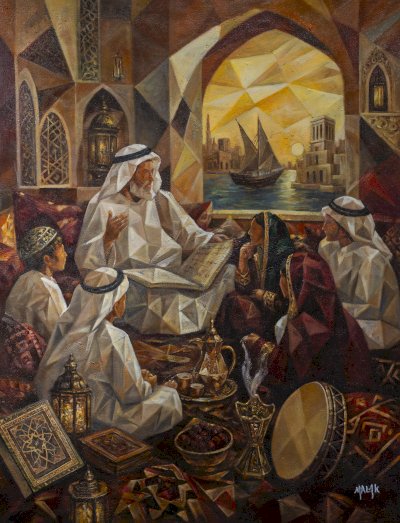



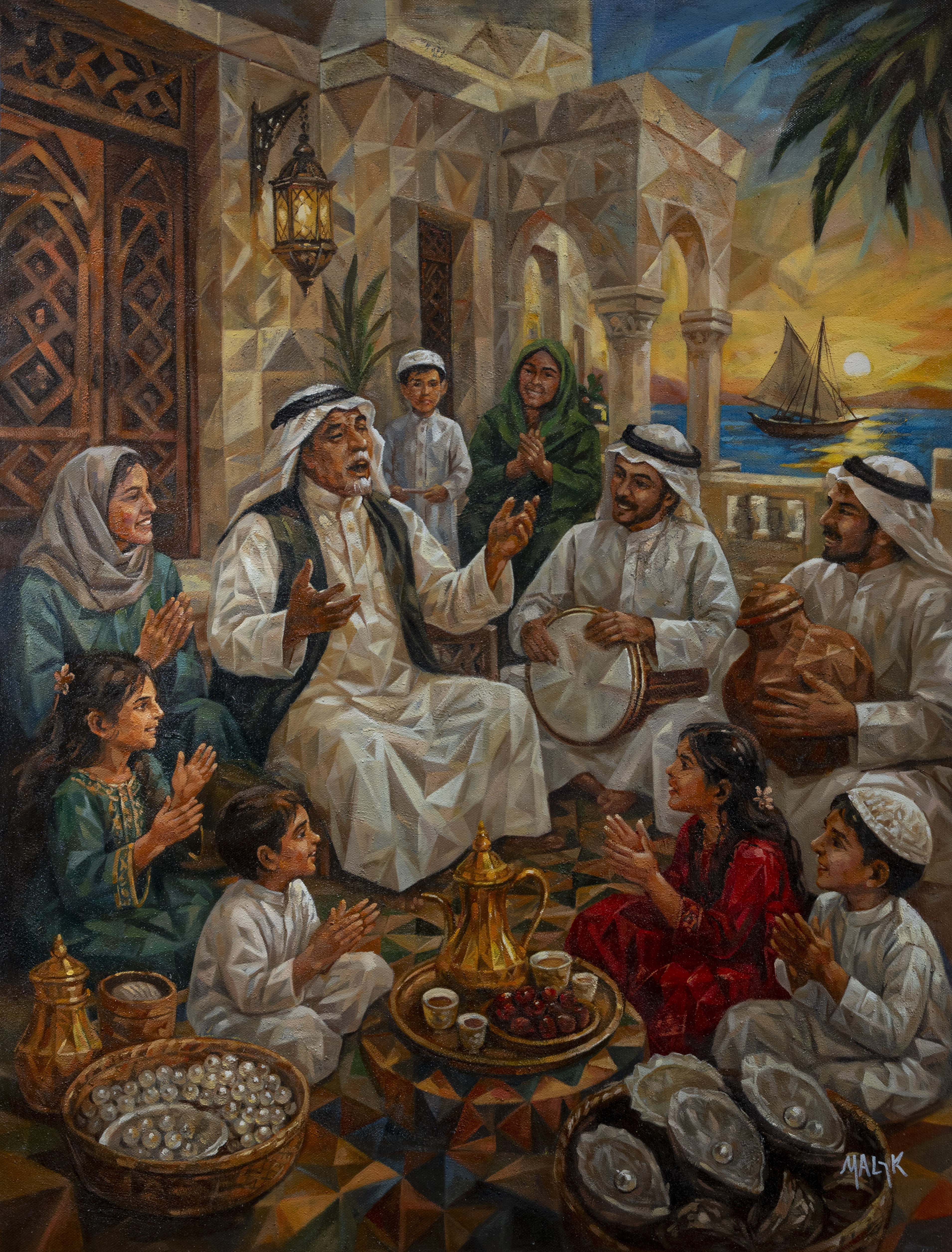
In Malak's Iraq composition, music and poetry become the language
through which one generation introduces another to its cultural
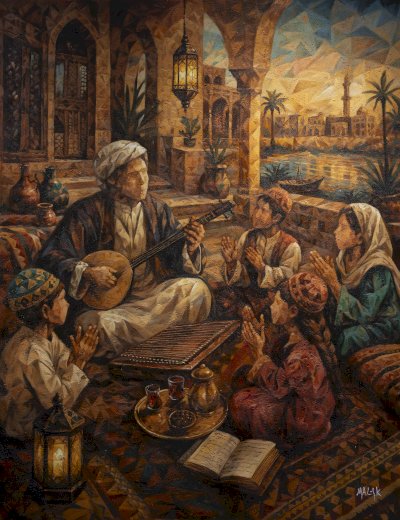
inheritance. An Iraqi maqam musician performs with children gathered
nearby in a traditional Baghdadi courtyard. The atmosphere is intimate
rather than theatrical — an environment in which listening itself
becomes a form of learning.
Iraqi maqam, recognised by UNESCO as part of the Intangible Cultural
Heritage of Humanity, combines a sophisticated melodic tradition with
classical and popular poetry. Malak translates that relationship between
rhythm, language and memory into the structure of the painting. A
jawzah, santur or book of poetry establishes the inherited object around
which the composition develops.
Mashrabiya, arches and warm Baghdadi brick frame the family, while
the Tigris and its date palms remain visible beyond. The river provides
both landscape and historical continuity: around its banks developed
cities, libraries, poetry, scholarship and some of humanity's earliest
systems of recorded knowledge.
Yet Malak refuses to turn the work into an archaeological meditation.
The emphasis remains resolutely alive — children listening, musicians
performing, knowledge exchanged in real time. Country-linked sand
enters the architecture and earth of the work, creating another material
connection between contemporary painting and ancient ground.