




At the centre of Malak's Palestine composition are three generations of
women — a grandmother, a bride and a younger girl — surrounded by
the movement and energy of family celebration.
Rather than approaching Palestine principally through conflict, Malak
turns towards the living cultural practices through which identity
continues to be expressed. Tatreez-inspired embroidery passes visually
between generations, while figures dancing dabkeh transform the
surrounding courtyard into a place of rhythm, community and
collective joy.
Palestinian embroidery and dabkeh are particularly apt cultural
anchors: both traditions are recognised by UNESCO, and both depend
upon transmission between people rather than preservation as static
artefacts. Embroidery, here, is something passed between
grandmothers, mothers and daughters; dabkeh remains closely
associated with weddings and communal celebration.
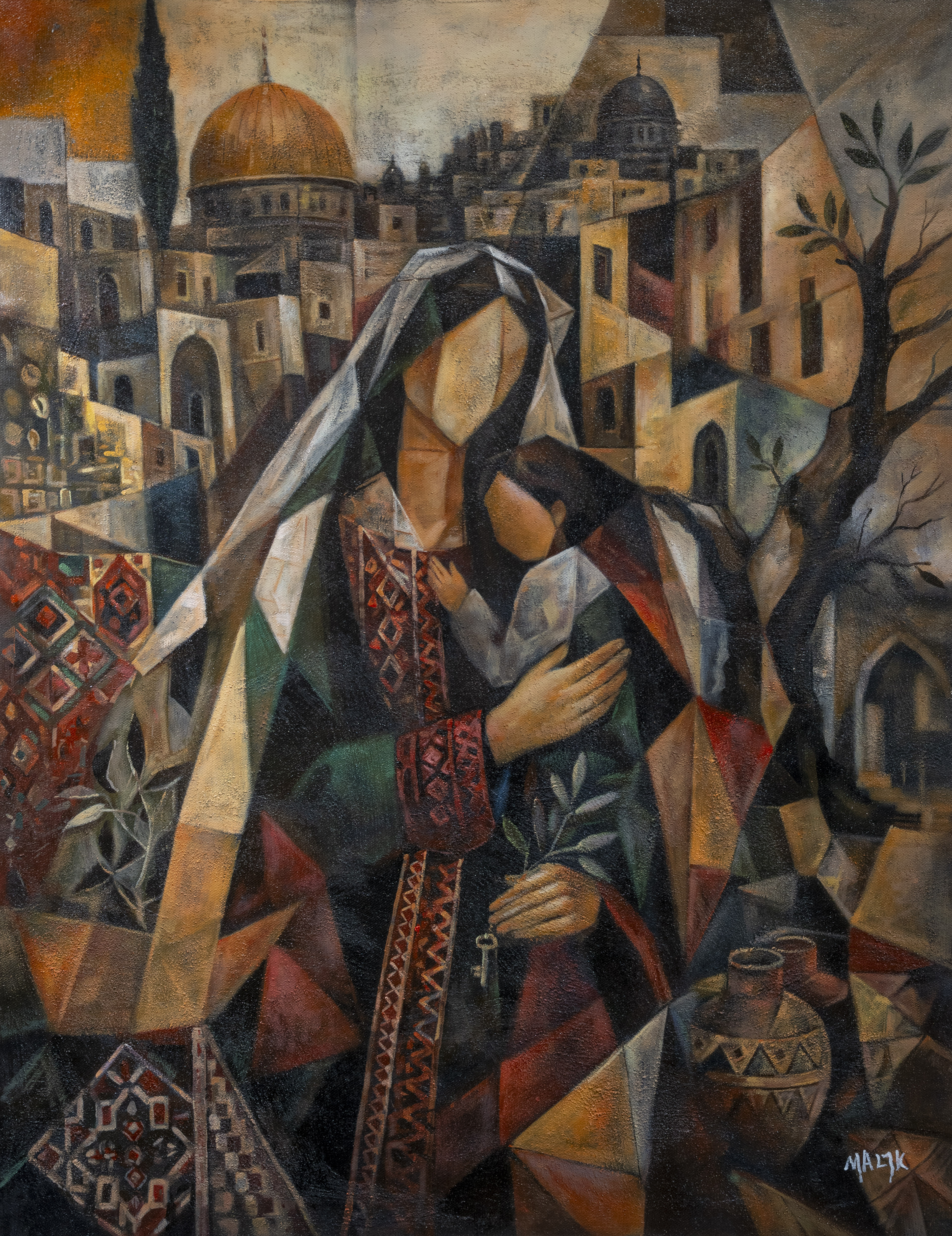
Sunlit stone architecture, old-city arches and olive terraces establish the
landscape around the family, while olive branches and blossom
introduce a living connection to cultivation and continuity. Country
linked sand is worked selectively into the architecture and mineral
surfaces of the painting, physically connecting its depiction of Palestine
to Palestinian land.